
Shopify Point of Sale (POS) in 2026: The Complete Guide to Selling In-Store & Online Seamlessly
 Deepak Kharware
Selling in 2026 is no longer limited to a single channel. Customers move fluidly between online stores, physical locations, pop-ups, events, and social platforms. To succeed in this environment, businesses need a system that connects in-store and online sales into one reliable workflow. This is where Shopify Point of Sale (POS) becomes essential.
Shopify POS is not just a billing machine—it is a unified commerce system that allows businesses to manage products, inventory, customers, payments, and staff across physical and digital channels from one platform. This guide explains what Shopify POS is, how it works, who should use it, and why it matters in 2026.
What Is Shopify Point of Sale (POS)?

Shopify POS is Shopify’s in-store selling solution that connects physical retail locations with your Shopify online store. It allows merchants to sell products in person using tablets or mobile devices while keeping inventory, orders, and customer data fully synchronized with their online store.
Instead of running separate systems for online and offline sales, Shopify POS creates a single source of truth for your business.
Official overview:
https://www.shopify.com/pos
Why Shopify POS Matters More in 2026
Retail in 2026 is omnichannel by default. Customers expect to:
-
Buy online and pick up in store
-
Return online orders at physical locations
-
See accurate inventory across channels
-
Receive personalized service in-store
Traditional POS systems struggle with these expectations because they operate in isolation. Shopify POS solves this by making online and offline sales part of the same ecosystem.
How Shopify POS Works Behind the Scenes
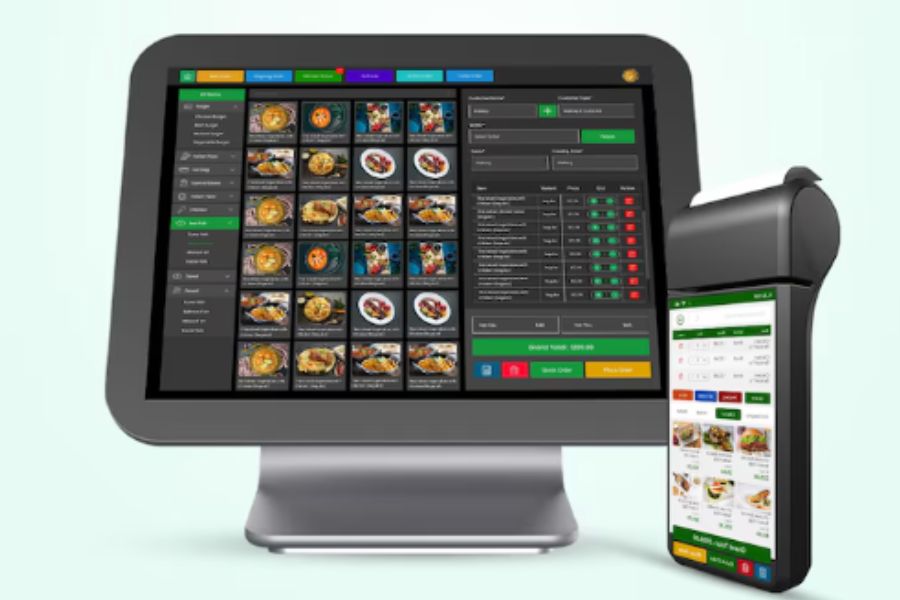
Shopify POS connects directly to your Shopify admin. Every in-store sale updates inventory in real time. Customer profiles are shared across channels, and reporting includes both online and offline data.
Payments are handled through Shopify’s secure infrastructure, ensuring consistency, reliability, and compliance. This architecture reduces errors and eliminates manual reconciliation.
Shopify POS for Store Owners: Real Benefits
For store owners, Shopify POS reduces operational complexity. Instead of managing separate tools for inventory, staff, and sales reporting, everything lives inside Shopify.
In 2026, this unified approach leads to:
-
Better inventory accuracy
-
Faster checkout experiences
-
Improved customer loyalty
-
Easier staff training
-
Clearer business insights
Shopify POS for Developers & Technical Teams

For developers, Shopify POS is part of Shopify’s broader platform. It integrates with Shopify APIs, allowing custom workflows, app extensions, and backend automation.
Developers can build:
-
Custom retail apps
-
Advanced reporting tools
-
Loyalty and CRM integrations
-
Inventory automation systems
This makes Shopify POS suitable not only for small stores, but also for large retail operations.
Developer reference:
https://shopify.dev/docs/apps/point-of-sale
Hardware & Device Flexibility
Shopify POS works with a range of supported hardware, including card readers, barcode scanners, receipt printers, and cash drawers. Merchants can choose setups based on store size and budget.
In 2026, mobile-first retail is growing, and Shopify POS supports selling from tablets or phones—ideal for pop-ups, markets, and events.
Hardware overview:
https://www.shopify.com/pos/hardware
Inventory & Order Management Across Channels
One of the strongest advantages of Shopify POS is real-time inventory synchronization. Whether a product sells online or in store, stock updates instantly.
This prevents overselling, improves customer trust, and supports advanced workflows like local pickup and ship-from-store—strategies that are increasingly important in 2026.
Payments, Security & Trust
Shopify POS uses Shopify’s secure payment infrastructure. Transactions are encrypted, compliant, and reliable. From a trust perspective, this matters greatly—especially as fraud prevention and data protection standards continue to rise.
Payment reference:
https://www.shopify.com/payments
Common Mistakes Businesses Make With POS Systems
Many businesses still treat POS as a standalone tool. This leads to disconnected data, inventory mismatches, and poor customer experience.
Another mistake is choosing legacy POS systems that do not scale or integrate with online commerce. Shopify POS avoids these issues by design.
Who Should Use Shopify POS in 2026?
Shopify POS is ideal for:
-
Retail stores with physical locations
-
Online brands opening pop-ups
-
Omnichannel businesses
-
Event-based sellers
-
Growing brands planning retail expansion
If your business sells both online and offline—or plans to—Shopify POS is a future-ready choice.
Final Thoughts
In 2026, retail success depends on connection, not separation. Shopify POS bridges the gap between online and physical selling, giving businesses a unified, scalable, and future-proof system.
For store owners, it simplifies operations.
For developers, it unlocks extensibility.
For customers, it delivers seamless experiences.
That combination is why Shopify POS continues to be a powerful retail solution.