
Webhooks Explained: Shopify, Zapier, Slack & Discord Automation Made Simple (2026 Guide)
 Deepak Kharware
In today’s automation-driven web ecosystem, webhooks play a critical role in enabling real-time communication between apps. From ecommerce platforms like Shopify to productivity tools like Slack and automation platforms like Zapier, webhooks power instant data transfers without polling APIs repeatedly.
This guide explains what webhooks are, how Shopify webhooks work, Zapier webhooks, Discord & Slack webhooks, testing webhooks, and Shopify Webhook API best practices — all in one place.
Download PDF -
What Is a Webhook?
A webhook is a way for one application to send real-time data to another application automatically when a specific event occurs.
Instead of asking:
“Has something changed?”
Webhooks say:
“Something changed — here’s the data.”
How Webhooks Work (Simple Explanation)
-
An event happens (order created, message sent, payment completed)
-
The source system triggers a webhook
-
Data is sent via HTTP POST to a predefined URL
-
The receiving server processes the data instantly
This makes webhooks faster, lighter, and more scalable than traditional API polling.
Shopify Flow & Shopify Plus Flows Explained (2026 Guide): Automate Your Store Like a Pro
Why Webhooks Are Important in Modern Development
Webhooks are essential because they:
-
Enable real-time automation
-
Reduce server load
-
Improve system responsiveness
-
Connect apps without manual intervention
They are widely used in ecommerce, SaaS platforms, DevOps, marketing automation, and chat tools.
Shopify Webhook: Real-Time Ecommerce Automation
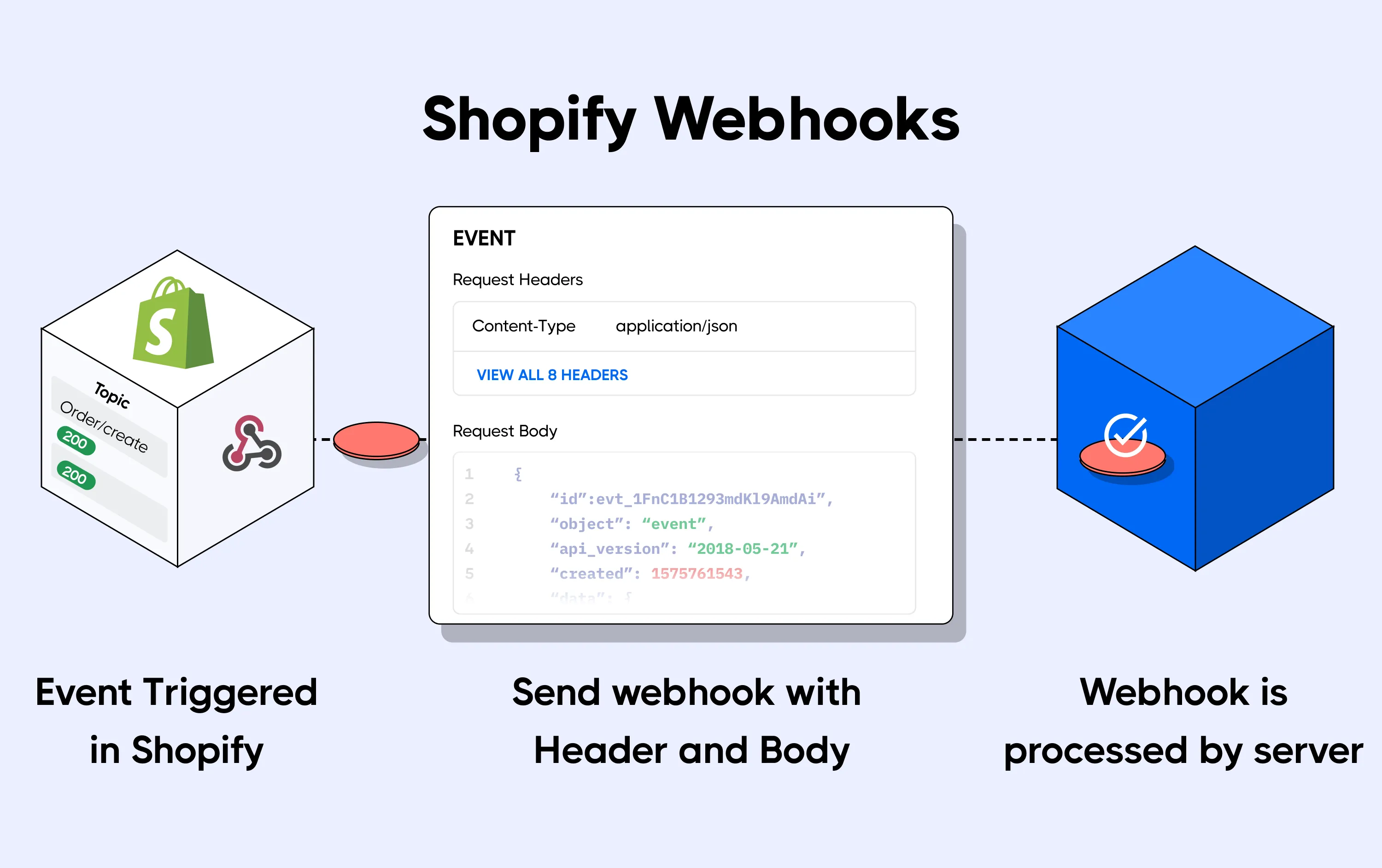
A Shopify webhook allows your Shopify store to notify external systems when something happens in your store.
Common Shopify Webhook Events
-
Order created
-
Order paid
-
Product updated
-
Customer created
-
Inventory changed
-
App uninstalled
Why Shopify Webhooks Matter
Shopify webhooks are critical for:
-
ERP & CRM integrations
-
Order fulfillment systems
-
Marketing automation
-
Analytics pipelines
-
Headless commerce architectures
If you’re building advanced Shopify systems, webhooks are foundational — especially in headless and API-driven setups.
Shopify Webhook API Explained
The Shopify Webhook API allows developers to programmatically create, manage, and verify webhooks.
Key Features
-
REST & GraphQL support
-
Secure HMAC verification
-
Topic-based subscriptions
-
Versioned API updates
Typical Flow
-
Register webhook via API or Admin
-
Shopify signs payload using secret key
-
Your server verifies authenticity
-
Process event safely
Security Best Practice
Always verify the X-Shopify-Hmac-Sha256 header to prevent spoofed webhook calls.
Zapier Webhook: No-Code Automation Powerhouse

A Zapier webhook allows apps without native integrations to connect using webhooks.
Two Types of Zapier Webhooks
-
Catch Hook – Receive data from any service
-
POST Webhook – Send data to external APIs
Use Cases
-
Send Shopify orders to Google Sheets
-
Trigger emails from form submissions
-
Sync CRM leads automatically
-
Connect custom apps without code
Zapier webhooks are extremely popular because they require no backend development.
Slack Webhook: Instant Team Notifications
A Slack webhook (Incoming Webhook) lets apps send messages directly into Slack channels.
Common Use Cases
-
New order alerts
-
Server downtime notifications
-
Deployment status updates
-
Payment success or failure alerts
Why Teams Love Slack Webhooks
-
Real-time visibility
-
No login required
-
Custom message formatting
-
Improves operational awareness
Slack webhooks are widely used in DevOps, ecommerce, and customer support workflows.
Discord Webhook: Automation for Communities
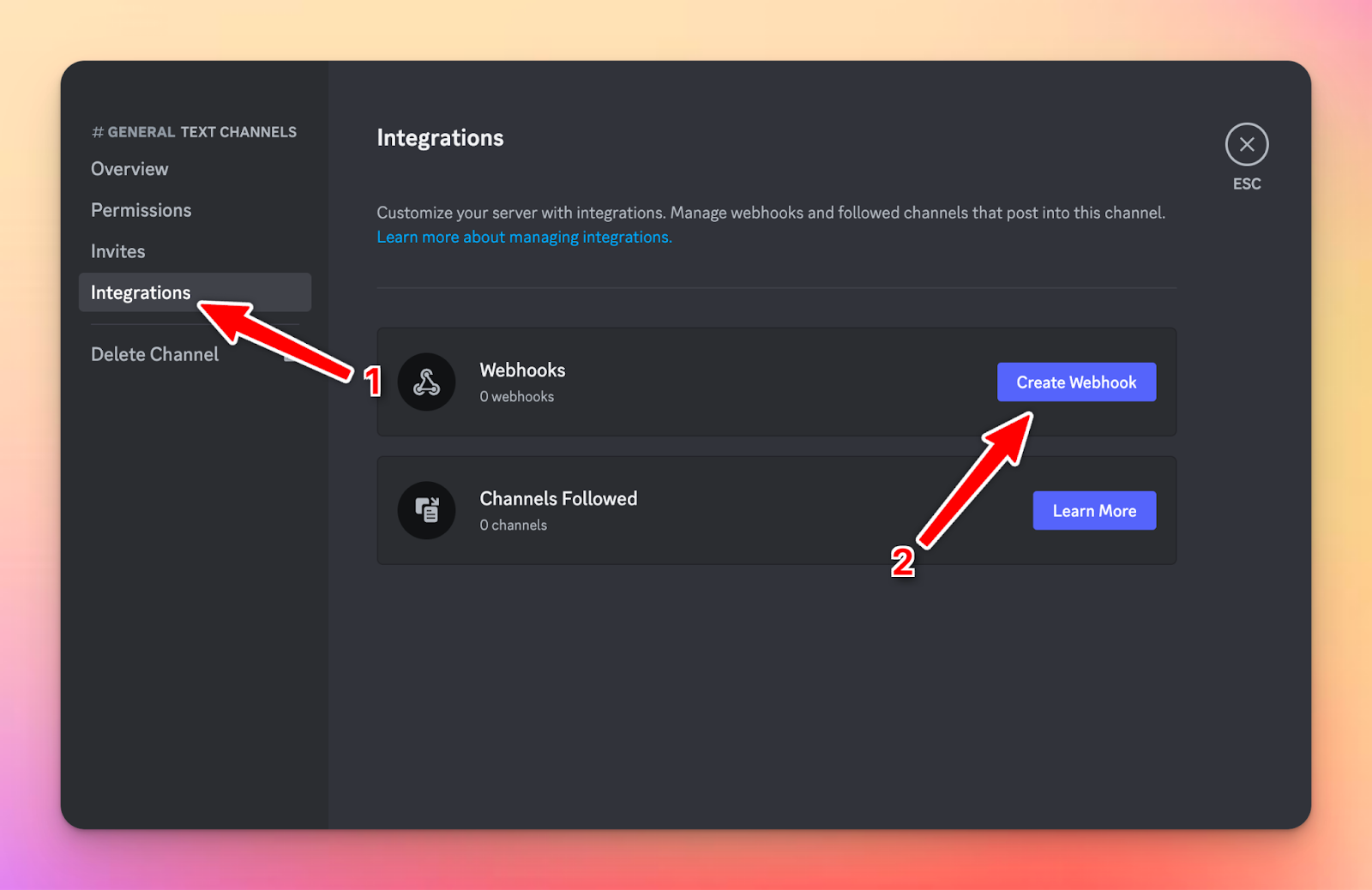
A Discord webhook allows external systems to post messages into Discord channels.
Popular Use Cases
-
Order notifications for store owners
-
GitHub commit alerts
-
Crypto & trading signals
-
Gaming server updates
-
Community announcements
Discord webhooks support embeds, images, and custom usernames, making them visually rich.
Test Webhook: Why Testing Is Critical
Before deploying any webhook, testing is essential.
What Is a Test Webhook?
A test webhook is a temporary endpoint used to:
-
Inspect payload structure
-
Validate headers
-
Debug failures
-
Ensure correct formatting
Popular Webhook Testing Tools
-
Webhook.site
-
RequestBin
-
Postman
-
Ngrok
-
Localhost tunneling tools
Testing prevents silent failures that can break automations.
Webhook vs API: Key Differences
| Feature | Webhook | API |
|---|---|---|
| Trigger | Event-based | Request-based |
| Speed | Real-time | Delayed |
| Server Load | Low | Higher |
| Use Case | Automation | Data fetching |
| Direction | Push | Pull |
Most modern systems use both APIs and webhooks together.
Webhooks in Headless & Modern Architectures
Webhooks are essential in:
-
Headless Shopify stores
-
Microservices
-
Event-driven systems
-
Serverless apps
-
Real-time analytics
They integrate perfectly with modern stacks and scale efficiently.
Summary
Webhooks are the backbone of real-time automation in modern web applications. Whether you’re working with Shopify Webhooks, Zapier Webhooks, Slack, Discord, or testing webhook flows, understanding how webhooks function gives you a massive advantage in building scalable, efficient systems.
From ecommerce automation to DevOps alerts and no-code workflows, webhooks enable instant, event-driven communication — making them a must-know concept for developers, marketers, and product teams alike.

